Showing posts with label Current affairs. Show all posts

Monday, February 18, 2019

To confront Iran


There is turmoil in Iran and this is important because its position in the crossroads of the Islamic world, linking the Middle East, the Caucasus and South and Central Asia. Iran has suffered a recent serious attack in Iran's southeastern province that borders Pakistan that killed 27 Revolutionary Guard personnel. This happens against the background to the ethnic fragmentation of Iran, being the Sunni militant group Jaish al Adl (Army of Justice) - which seeks greater rights and better living conditions for the ethnic minority Baluchis - who claimed responsibility for the attack. The Baluchis are predominantly Sunni Muslims and in Iran, they number some two million.


In addition, the economy is in bad shape. Iran suffers the deepest economic recession in its recent history, with hundreds of factories closed, 12 million unemployed, galloping inflation and half the population below the poverty line, according to the Iranian Central Bank, despite the fact that in 2017, oil income was 55,000 million dollars, 45% more than in 2016. According to the World Bank estimations, unemployment among the young reached 30% in 2018. Unemployment among the women nearly double the one of men.

It is interesting to compare Iran with his Turkish neighbor, as both are large Muslim countries with a similar demographic growth. However, looking at the here below graphic, we can observe that the Turkish per capita income growth is much bigger.
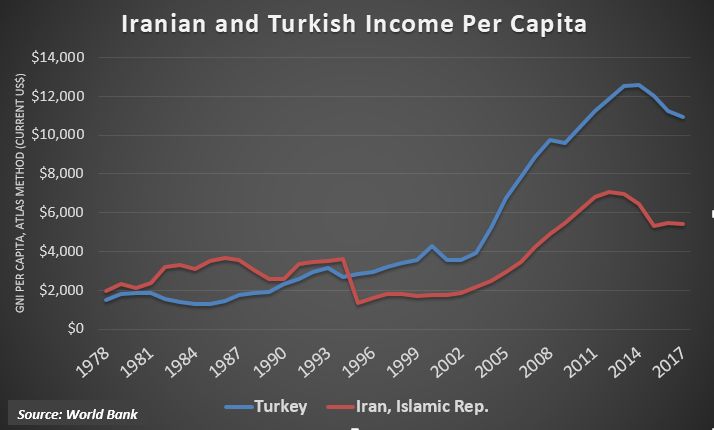


If instead of the above data, but also from the World Bank databank, we take the GDP per capita in current US$, we will find that in 1986, a couple of years before the Islamic Revolution, Iran had $4,245 income and Turkey only $1,511. However, in 2017, whilst Iran only reached the $5,594, Turkey had a $10,546 income. Before the revolution, the minimum salary allowed to purchase some 74 kg of red meat, but currently is only allows to buy about 10 kg.

The US pressures Iran to take it out from its imperial adventures and nuclear ambitions, but today the main commercial partners of Iran are China and India. The Chinese supply some 13% of the Chinese imports and purchase about 28% of its exports. The Western Europeans are also a problem, because of the multimillion business that some of its corporations had in Iran. Amongst them, the French energy company Total, the Norwegian Saga Energy, Airbus, ATR, the German Siemens, the Italian FS, and the French Renault. US vicepresident Mike Pence has critized his European allies for undermining the sanctions imposed by his country against the Iranian theocracy. The US State Secretary Mike Pompeo has warned that it is impossible to achieve peace and stability in the Near East without confronting Iran. We think he is right.

Friday, October 19, 2018

Jamal Khashoggi wise last words


The Washington Post received the last column of Jamal Khashoggi and at first moment decided to delay its publication with the hope he would reappear and that they could edit it together. Finally, they arrived to the sad conclusion that this would not happen, and published it. Here below some extracts, to which we think, no comments are needed.

“I was recently online looking at the 2018 “Freedom in the World” report published by Freedom House and came to a grave realization. There is only one country in the Arab world that has been classified as “free.” That nation is Tunisia. Jordan, Morocco and Kuwait come second, with a classification of “partly free.” The rest of the countries in the Arab world are classified as “not free”.

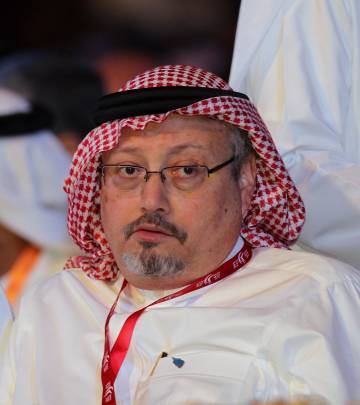
Jamal Kashoggi,  2012 in Dubai.
As a result, Arabs living in these countries are either uninformed or misinformed. They are unable to adequately address, much less publicly discuss, matters that affect the region and their day-to-day lives. A state-run narrative dominates the public psyche, and while many do not believe it, a large majority of the population falls victim to this false narrative. Sadly, this situation is unlikely to change.”


“The Arab world is facing its own version of an Iron Curtain, imposed not by external actors but through domestic forces vying for power.”

“We suffer from poverty, mismanagement and poor education.”


 [Source: https://www.washingtonpost.com/opinions/global-opinions/jamal-khashoggi-what-the-arab-world-needs-most-is-free-expression/2018/10/17/adfc8c44-d21d-11e8-8c22-fa2ef74bd6d6_story.html?utm_term=.0c5e14e0cb6a]

Monday, September 24, 2018

Iran: Will the regime survive?


The Iranians are in deep problems in spite of having rich minerals resources: the fall of the rial, some 40% unemployment among the youngest, cuts in social benefits, ethnic grievances, only a 15% female participation in the labor force, etc. No less than one and a half million clerics are teaching the Koran, but the 1979 revolution has failed. The government relies for approximately 80 percent of its tax revenue on the oil industry and there has been a 35 percent reduction in Iranian oil exports since April. The country’s active work force is 26 million, of whom at least 10 million are estimated to be jobless. There is an operational budget deficit of more than US$7.43 billion.

In 1970, years before the Islamic revolution, Iran produced some 7% of the world oil production, now it went down to less than 5%.

This should not come as a surprise if we take into account the Islamist character of the regime, which has failed also everywhere else: Turkey, Gaza, etc. Iran’s economy is too much dependent on oil and 45% of the Iranian economy belongs to the government.  Only about a fifth of the Iranian economy is in private hands. The World Bank 2018 Doing Business Report ranks Iran in place 124.

The lack of attraction of Iran to foreign investment is clearly related to its efforts to export their Islamist ideology and its military support for Shiite factions mainly in Lebanon, Syria, Iraq, and Yemen. Its Holocaust denial and genocidal attitude towards Israel puts them also in a bad light.


                                          Internal discontent in Iran


The West sanctions caused that even the Indian state-owned Chennai Petroleum (CPCL) announced that its refineries would be among the latest to stop processing Iranian oil altogether. This move involved the cancellation of a one million barrel order that was already in place for the month of October.

The latest terror attack in Ahvaz should also put in light the more general problem of Iran’s ethnic diversity. In particular, we should remember that a quarter of the population – the Azeri minority in the region of Tabriz – is of Turkish origin.

Iran is in need of a regime change that should reinforce modernization and secularism, and abandon their military interventions abroad, as well as the futile aspirations of non-civilian nuclear projects.

Thursday, August 2, 2018

Basic Law: Israel as the Nation State of the Jewish People


First of all the text, adopted by the Knesset on July 19th, 2018:

1. The State of Israel

a) Israel is the historic homeland of the Jewish people in which the State of Israel was established.

b) The state of Israel is the nation-state of the Jewish people, in which it fulfills its natural, religious, and historic right to self-determination.

c) The fulfillment of the right of national self-determination in the State of Israel is unique to the Jewish people.

2. National symbols of the State of Israel

a) The name of the state is Israel.

b) The flag of the state is white, two blue stripes near the edges, and a blue Star of David in the center.

c) The symbol of the state is the Menorah with seven branches, olive leaves on each side, and the word Israel at the bottom.

d) The national anthem of the state is "Hatikvah"

e) Further details concerning the issue of state symbols will be determined by law.

3. The unified and complete city of Jerusalem is the capital of Israel.

4. The Language of the State of Israel

a) Hebrew is the language of the state.

b) The Arabic language has a special status in the state; the regulation of the Arab language in state institutions or when facing them will be regulated by law.

c) This clause does not change the status given to the Arabic language before the basic law was created.

5. The state will be open to Jewish immigration and to the gathering of the exiled.

6. The Diaspora

a) The state will labor to ensure the safety of sons of the Jewish people and its citizens who are in trouble and captivity due to their Jewishness or their citizenship.

b) The state will act to preserve the cultural, historical and religious legacy of the Jewish people among the Jewish diaspora.

7. The state views Jewish settlement as a national value and will labor to encourage and promote its establishment and development.

8. The Hebrew calendar is the official calendar of the state and alongside it the secular calendar will serve as an official calendar. The usage of the Hebrew calendar and of the secular calendar will be determined by law.

9. National Holidays

a) Independence Day is the official holiday of the state.

b) The Memorial Day for those who fell in the wars of Israel and the Memorial Day for the Holocaust and heroism are official memorial days of the state.

10. Saturday and the Jewish Holidays are the official days of rest in the state. Those who are not Jewish have the right to honor their days of rest and their holidays. Details concerning these matters will be determined by law.

11. This Basic Law may not be altered except by a Basic Law that gained the approval of the majority of the Knesset members.

_________________________________________________________________________________


Now some observations.

The League of Arab States was formed in Cairo on 22 March 1945 and has 22 members, although Syria's participation has been suspended since November 2011, as a consequence of the government repression during the current Syrian civil war. The Charter of the Arab League endorsed the principle of an Arab homeland.

The Organization of Islamic Cooperation, founded in 1969, has today 57 member states and its aim is to "safeguard and protect the interests of the Muslim world”.

Among all this, one could have naively supposed that a sole Jewish state, 24 times smaller than Spain, could be accepted. It seems that this was too much to ask.

But wait, may be the comparison with the Arab and Muslim world is not really that much desirable. May be it should be done with Europe. Well, Britain’s flag has a cross and its monarch is the supreme governor of the Church of England. Also Greece has a flag with a cross and in its second article the constitution singles out the Eastern Orthodox Church as the country's "prevailing religion." In Denmark and Norway we can also find crosses in the flags, and their royal families must be members of their respectively churches. We can also can find crosses in the flags of Finland, Sweden, and Switzerland. But then again, a national state for the Jewish people, seems a step too far for much of the “enlightened” public.


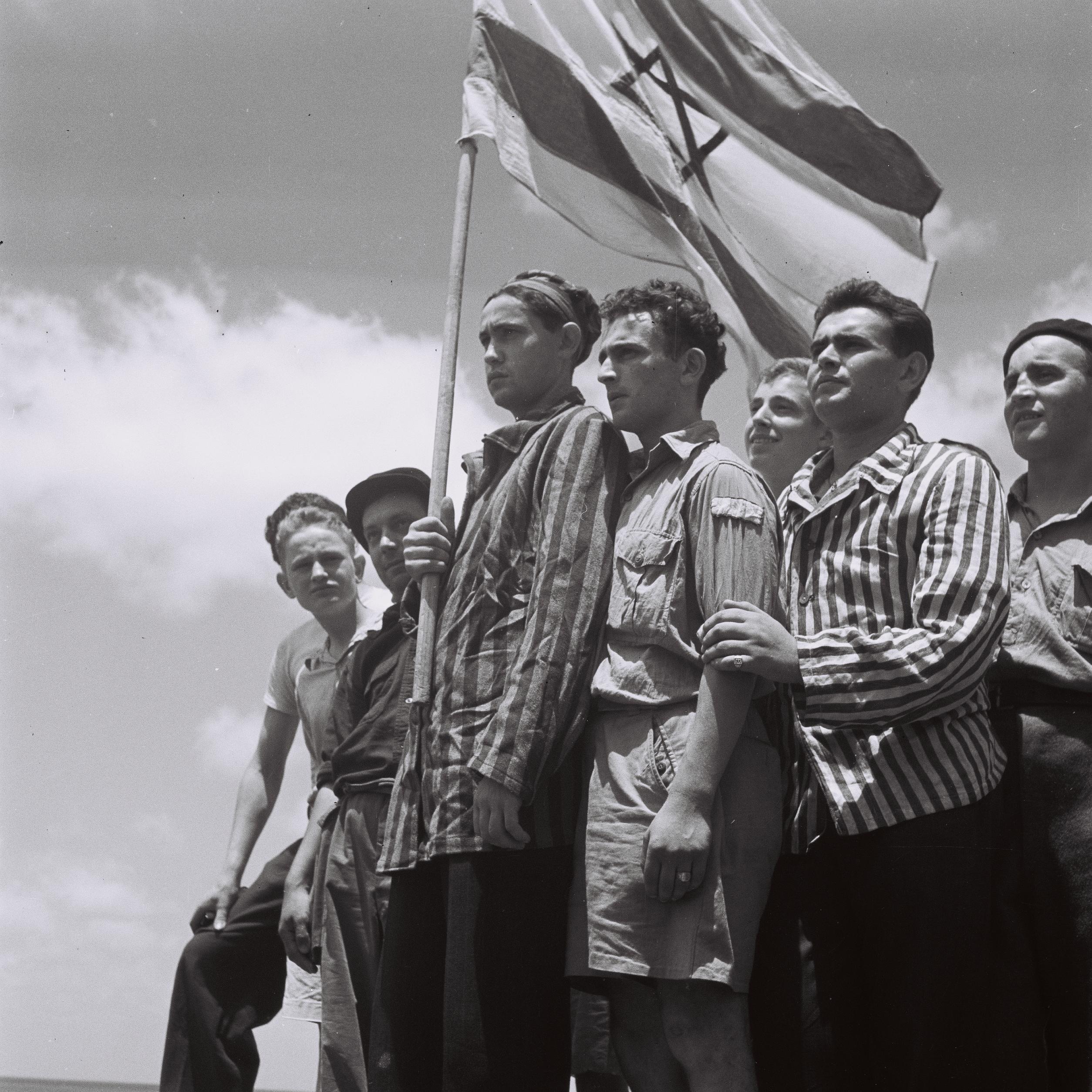
Buchenwald survivors arrive in Haifa to be arrested by the British 


In relation to the statement that Israel will be open to Jewish immigration, it must be said that the Law of Return, which was passed on 5 July 1950 and allowed for millions of Jews to come back to their ancestral land, is not a discriminatory one but it came as an answer to discrimination, racism and persecution. The current frightening situation of the French Jewish community shows the clear need of special measures for helping Diaspora Jews to come to Israel. Thousands have done it in each of the last years, and a comprehensive study conducted by the French government, informs that 60,000 to 100,000 French Jews want to come to Israel (https://www.ynetnews.com/articles/0,7340,L-5075151,00.html). And the French case may be only the top of the iceberg or the rising wave of anti-Semitism that shudders the Western world. There are some 18 other countries with similar laws as the Israeli Law of Return, but in general with less justification. But of course, usually only Israel is under the magnifying glass.

For sure much could have been added to the Law and may be some items would have been better not to have been included, but the harsh and raucous reactions to the Law seem to confirm its need.

Wednesday, November 22, 2017

Saudi Arabia in Turmoil

Saudi Arabia is geographically the second-largest state in the Arab world after Algeria, the world's largest oil producer and exporter; it controls the world's second largest oil reserves after Venezuela, and the sixth largest gas reserves. The oil industry is concentrated in the northeastern part of the country, and its production costs are estimated among the lowest worldwide.

Last year oil output of the Kingdom represented more than 39% of the Middle East production. Now, with the largest economy of the region, Saudi Arabia is pushing to increase the oil price for the early 2018 to 70 dollars the barrel. Saudi Arabia’s economy is driven mostly by petroleum, which accounts for almost 90 percent of revenue. Still, crude remains at almost half its mid-2014 price, leaving the Kingdom desperate to fire up its economy to buttress plummeting gross domestic product.


The Kingdom is in need of serious reforms. Unemployment raised to more than 12% of the labor force at the end of 2015, but among the youngest people. In April 2016 it was published in Riyadh (the Saudi capital) a plan called “Vision 2020”, a daring proposal whose main points were to diminish the dependence from oil exports, an accelerated growth of the private business segment of the Kingdom’s economy, shortcuts in the public sector employment, cancelation of subsidies, increased taxation to diminish the public debt, and more transparency and profitability to the government economic activity. By the 2019 it is expected an important increase of the cost of fuel, water and electricity. The base of the reforms are the recommendations of the International Monetary Fund.

An open question is what will happen with the more than six million foreign workers, who play an important role in the Saudi economy, particularly in the oil and service sectors.

The Kingdom has a plan to increase the annual number of pilgrims to Mecca from the current seven million to thirty million in the future. Half of those trips will be flown by Saudi Arabian Airlines, with the remaining covered in joint ventures with the flag carriers of Islamic nations including Malaysia, Indonesia and Nigeria.


The modernization process included some strong measures, like the arrest this month of more than 200 Saudi citizens, including eleven princes and four government ministers, on corruption charges. The big question remains if this harsh steps aim to create a more open and dynamic business environment, or if the arrests turn out to be no more than a purge of opponents to the crown prince's accession to the throne. According to some Saudi sources estimates, the Kingdom may be able to recover between US$50 billion and US$100 billion from settlement agreements with suspects detained in an anti-corruption crackdown.

The anti-corruption crackdown comes at a delicate time for the Saudis, an absolute monarchy grappling with the worst economic slowdown since 2009 as well as political unrest in the region, stirred in no small part Iran’s aggressive foreign policy to empower the Shiite influence in the region. In the past two years, Saudi Arabia had to deal with the Shiite Houthi insurgency in Yemen and confrontation with its neighboring Qatar.

Sunday, August 13, 2017

The Libel of Colonialism

On September 16, 1947, three members of the Jewish Agency in Palestine, Aubrey (Abba) Eban, Jon Kimche, and David Horowitz, met in London with ‘Azzam Pasha, who was the first Secretary General of the Arab League (1945-1952).  That was prior to the partition of Palestine and the intention of the Zionist activists was to try to find an accommodation between Jews and Arabs on the issue of Palestine. On that occasion ‘Azzam Pasha said: “The Arab world is not in a compromising mood. (…) We shall try to defeat you. I’m not sure we’ll succeed, but we’ll try. We were able to drive out the Crusaders, but on the other hand we lost Spain and Persia. It may be that we shall lose Palestine. But it’s too late to talk of peaceful solutions.” It defined well the Arab position, but one that was not too easy to sell to the West. Better than accuse the Jews of being infidels, it was to brand them as colonialists. Different sectors of guilt-ridden Europe couldn’t find something better. They behaved horrible against the Jews in the Nazi era, but look, those Jews aren't saints either. True, the Europeans committed the sins of colonialism, but who didn’t, just look at the Jews in the Middle East.

Of course this accusation is rubbish. Zionism, contrary to the European colonial model, lack a mother country, a metropolis like the pillars of colonialism Britain, Portugal or France in its time, it has a clear national character of its own, and basically was not interested in the capitalist exploitation of the poorer peasants. Eastern European Jews didn’t come to the land of Israel, a poor corner, vastly underdeveloped and unoccupied of the Ottoman Empire, as agents of European powers like the Czarism, but precisely escaping from its humiliations and persecutions.

Still there are those who still insist that the Zionist themselves have described their own enterprise as one of colonization. Indeed that is true, but colonization is not always colonialism, as well as the colonialist enterprise has not always implied colonization. The Belgian in Congo, the British in Sudan or the French in Morocco, established colonial control in those countries without creating settlements of their European nationals. And there are cases like the Ukrainians in Canada or the Dutch in South Africa, were there was colonization but no support of a colonial government. In the case of Zionism there was colonization without colonialism. There was British colonialism, but Zionism had to confront it, and it displaced it with military means.


Iraqi Jews leaving Lod airport (Israel) on their way to ma'abara transit camp, 1951. European colonialism?


Finally, and in spite of all, there are still those who insist that the Zionist enterprise should be framed in the vast European expansion of the XIX and XX centuries, and therefore, even without metropolis or exploitation of cheap indigenous labor, they sustain the accusation of colonialism. This is very wrong. After the end of the Second World War, was the desire of the European Jews survivors of the displaced persons camps at Zeilsheim, St. Ottilien, Landsberg, Schauenstein, Feldafing, Dachau, Foehrnwald, and others, to immigrate to the land of Israel, a colonial aspiration? And it must be remembered that more than half of the immigrants to the newly founded state of Israel, were Jews who took refuge from Arab countries.


Zionism is not a colonial enterprise, but the national liberation movement of the Jews, through which they retake their destiny into their own hands and manage by themselves their future. In any case, Zionism is the astonishing story of a successful de-colonization revolutionary movement, which broke the chains of the Galut (the Jewish Diaspora), allowed the Jews to return to their roots and language, and brought them freedom.

Wednesday, June 14, 2017

Qatar strengths and weakness

Why Qatar matters so much? The answer is simple, because of their immense energy resources. They possess proven natural gas reserves of more than 25 trillion cubic meters - 13% of the world total and, among countries, third largest in the world - and proved oil reserves of more than 25 billion barrels, allowing production to continue at current levels for about 56 years. Their per capita GDP is one of the world highest amounting to about 130,000 US$. Qatar hosts the broadcaster Al Jazeera, which has a noted impact in the region. The tiny sheikhdom is an ally of the islamo-fascist regime of Iran, with which it exploits a vast gas field.

If they are so rich, should they be worried because of the recent steps of key Sunni Arab states against them? Yes. Some forty percent of the food supply used to arrive to Qatar from the Saudi border. In general, the country purchases abroad 90 percent of what their 2.7 million inhabitants eat. The curbing of Qatar Airlines will affect the country’s revenues.


The Qataris are a minority in their own country. Foreigners account for about 88 percent of the population, one of every four Qataris is of Indian origin. And the percentage of the foreigners among the workforce is even higher. The present political crisis could send the nearly 200 thousand Egyptian residents back home, which would affect certain sectors like the health service, were the Egyptians have an important role. We must not forget that Qatar has supported the Muslim Brotherhood, has mobilized its media outlets to attack the Egyptian regime and hosted a number of Muslim Brotherhood leaders who had fled Egypt.


Several days after Saudi Arabia, the United Arab Emirates, Egypt and Bahrain broke off relations with Qatar because of the emirate's financing of terrorist groups, such as Hamas, as well as its ties to Iran, they placed dozens of figures linked to Qatar on blacklists, including members of Qatar's royal family and one of the spiritual leaders of the Muslim Brotherhood.

What now? Will Qatar, the world’s biggest exporter of liquefied natural gas, resist the pressure or will Doha accept the Saudi terms? Will Iran and Turkey keep supporting the tiny Gulf sheikhdom and to what extent? When Trump enforced his alliance with Riyadh, was he aware of the giant American military airbase located southwest of Doha? What will happen with the Doha's hosting of the 2022 World Cup? We live in the Middle East, and in the Middle East the future is always a surprise.


Monday, May 29, 2017

Libya: Weakness and Crisis

Libya is one of the epicenters of the world crisis because of the massive influx to Europe of African migrants. Since 2015 385.000 of them have arrived from Libya to the Italian coasts and in four years, 12.064 have died in the sea. It is unknown the number dead in the desert.

Located between Egypt and Tunisia, Libya is weak and divided. There are two main reasons for this. Libya shares with a large part of the Arab world the lack of consolidation of a national state (as happens in Iraq, Syria, Lebanon, Yemen, etc.) and the main social fracture is composed by the tribal one. But there is also a peculiarity of the former regime of the Gaddafi dictatorship, who kept a security apparatus not especially strong and kept the military fragmented and not too much equipped because of fear of sedition.

Weak border controls have transformed the country into a primary departure area to migrate across the central Mediterranean to Europe in growing numbers. In addition, almost 350,000 people were displaced internally as mid-2016 by fighting between armed groups in eastern and western Libya and, to a lesser extent, by inter-tribal clashes in the country’s south. Coming from countries like Nigeria, Senegal or Gambia, they try to reach the coast but sometimes they are captured and sold averaging a cost of some 200 to 500 US dollars. They are used sometimes to achieve a rescue payment, sometimes exploited as forced labor or sexual abuse.

The strife-torn inner situation has handicapped the productive infrastructure including the oil terminals, in a country almost entirely dependent on oil and gas exports.


Bottom line, a bad situation, were apparently only an international strong help could deliver results, albeit we do not see this happening. A decisive European action could only be promoted not that much by the interest in the Libyan energy resources, but by the possibilities that the country’s domestic development could absorb the African migrants and stop their flow to Europe.

Sunday, February 26, 2017

The Economic Boycott Against Israel

The strategy of the anti-Jewish boycott in modern times can be traced to the anti-Semitism of the Nazi Germany and in the Middle East to the postwar Arab anti-Zionist activity. In the same year that Hitler rose to power in Germany, the Arab Higher Committee (لجنة العربية العليا), headed by the future Nazi collaborationist Haj Amin al-Husseini, Mufti of Jerusalem, called for a boycott against the Jews in the British Mandate of Palestine. A couple of years before the 1948 establishment of the State of Israel, the Arab League organized an official boycott against the Jews of Palestine in December 1945.

Three Jewish businessmen are forced to march down a crowded Leipzig street while carrying signs reading: "Don't buy from Jews. Shop in German businesses!" Leipzig, Germany, 1935.
Three Jewish businessmen are forced to march down a crowded Leipzig street while carrying signs reading: "Don't buy from Jews. Shop in German businesses!" Leipzig, Germany, 1935. 
— US Holocaust Memorial Museum

In 1994, partially because of the Oslo accords, partially because the inefficiency of the Arab boycott, GCC states (Cooperation Council for the Arab States of the Gulf), officially ceased their participation in the boycott. They also states that the boycott hindered the regional economic development.

Since then the boycott was not much applied, but in the mid-2005 the Palestinians initiated a global movement pressuring for boycott, divestment and sanctions, in different fields like trade, academics, cultural activities, etc. The main aim of this movement is the destruction of the State of Israel as was admitted by one of its founders, Omar Barghouti, who said “ending the Israeli control of the territories is only the first stage in the way to implement the vision of dismantling Israel”. Barghouti was born in Qatar, grew up in Egypt and later moved to Israel as an adult. He opposes the two-state solution. He has been widely criticized for on one side lobbying for a global economic, cultural and academic boycott of Israel, and on the other, having studied in the Tel Aviv University.
In the end of the day, the BDS movement is basically an anti-Semitic force, and, in the same fashion that the Nazis attacked in the last century the Jewish main demographical centre, today they attack the current largest Jewish community of the world and the main resource of the Jewish people, the State of Israel.


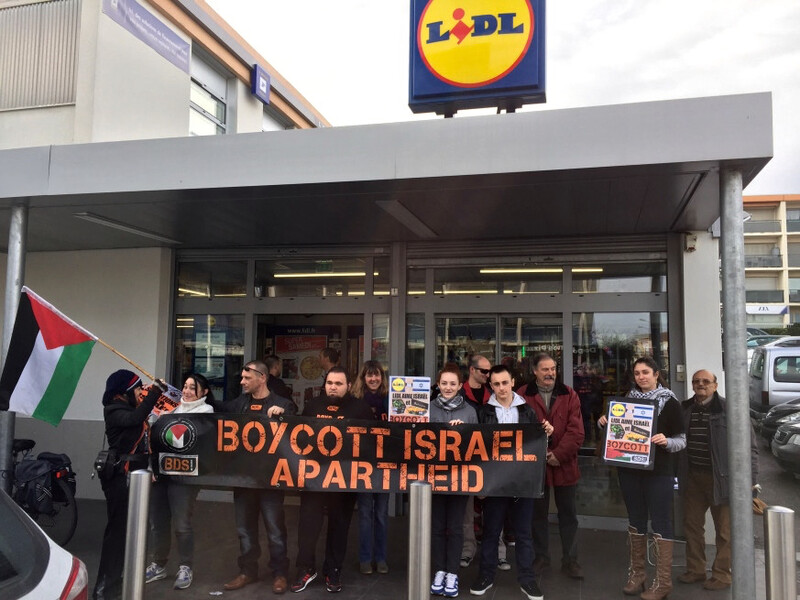
In a direct challenge to legal rulings, BDS activists staged a protest calling for the boycott of Israeli goods at a LIDL supermarket in the south of France on 23 January 2016. 

The BDS is a malign force, but also very inefficient. They can disrupt the selling of Israeli oranges in a Parisian supermarket, but it doesn’t work the same way with the complex Israel export of knowhow and high-tech products. Israel is economically strong and it is strengthening even more. In the last days, the Indian government has cleared a $2.5 billion deal purchasing from Israel for its army a medium-range surface-to-air missile defense system. The partners of the Leviathan gas reservoir, some 130 km west of Haifa, have announced that they will invest $3.75 billion. Crushing the BDS efforts, this is Israel’s biggest energy project and financial investment in all its history.

Monday, November 14, 2016

Egypt in a dangerous crossroads

Egypt is undergoing a serious economic, social, political, military, and diplomatic crisis. Egypt has a larger population than Iran, but its economy is smaller, and it is a country with a not negligible geostrategic importance because of its location between Africa and Asia.

Currently Egypt is not able to feed properly its population, neither to provide it with enough employment. It is estimated that some 35 – 40% of Egypt's population is earning less than the equivalent of two dollars a day. Egypt has a population of over 90 million, and whilst the official figures for unemployment are of 27%, estimates put the number at a minimum of 40%. Recently the government devaluated the Egyptian pound by nearly half of its value. A veteran writer on Egyptian affairs has described last month the situation of the sugar deliverances as follows: “Sugar supplies have dwindled. Supermarkets and shops have run out, long queues are forming outside government cooperatives, and prices have doubled over the last few weeks. The state-owned Food Industries Holding Company has been reduced to rationing meagre sugar supplies to the food processing industry, especially soft drink makers, to keep factories running.” (cfr. http://www.thenational.ae/business/economy/patrick-werr-sugar-shortage-in-egypt-leaves-a-bitter-taste#full)  Tourism, another key factor in the Egyptian economy, is also under a severe crisis due that because of security concerns England canceled its flights to Sharm el-Sheikh and Russia canceled altogether its flights to Egypt.

Politically, Egypt’s power elite is divided between on one side President al-Sissi, backed by the Central Intelligence, and on the other the Armed Forces and the Military Intelligence. There seems to be no danger currently of another coup, because the fear of total political and economic collapse enhance the preference for a smooth leadership transition in the next few years. It is within this framework that we must see the call of some army officials to al-Sissi not to run for reelection in 2018.

The national security is challenged by the extremist armed actions in the Sinai Peninsula, in especial the Islamic State group. The army is having difficulty to cleanse the area due to its mountainous character and the presence of some highly trained terrorist insiders among Bedouin tribes who are difficult to track down.

If all this wasn’t enough, things got worse with the Cairo rejection of participating in the Saudi-led coalition battering the Shiite Houthis and their vote for a Russian resolution on Syria. As a result, last month Saudi Aramco decided to stop the transfer of discounted oil to Egypt.


In spite of everything, Egypt is still considered a leading power in the Arab world. The eyes are put now in the new incoming administration in Washington, to see if and how it will help Egypt, or if it will keep the retreatment path of the Obama policy. Trump will have to understand that the price of isolationism is the enhancement of the danger of pushing Egypt into Russian or Iranian arms.

Thursday, November 3, 2016

Ethnic cleansing in the current war

The Middle East war is causing gigantic demographic changes, in a proportion than can be compared to the massive expulsion of ethnically Germans from East Europe at the aftermath of World War Two or the formidable population exchange between Indians and Pakistanis. Interestingly the latter was not done on historic or linguistic lines, but were implemented on religious lines, in the same vein that the main source of tension in the Middle East today runs in the lanes of the Sunni-Shia confrontation. The religious variable has shown much wider influence than what we thought during the Cold War years. The large-scale population movements originated in the region have not been a simple byproduct of war. Rather, they represent conscious strategies of ethnic cleansing by each faction. Already last year, Fabrice Balanche, of The Washington Institute for Near East Policy, wrote that “the Syrian conflict is a sectarian war, and ethnic cleansing is an integral part of the strategy used by various actors, even if they claim otherwise.” (http://www.businessinsider.com/these-maps-show-how-ethnic-cleansing-has-become-a-weapon-in-syrias-civil-war-2015-12).

Before the inner war in Syria began in 2011, the Sunni Muslims make up about three quarters of the Syrian population, whilst the Shia Muslims were only some 11-13%. This was a problem for the nepotistic Alawite regime, and their Iranian and Russian allies. The war soon brought up the issue of the destruction of the sheltering populations, and the depopulation and ethnic cleansing of rebel-held areas was incremented. More than a million Sunni Syrians have gone to Europe, and some four million are refugees in Jordan, Turkey and Lebanon. On the other hand, hundreds of thousands of Shiites have come to Syria from Iraq, Iran, and other countries. Another aspect, is the redistribution by the Damascus regime of land and houses that belonged to Arab Sunnis who relocated to other places to remaining Arab Sunnis, and so increasing their dependence on the official authorities and arising conflict with anyone who decides to return.

The ethnic cleansing is a rising phenomenon both in Syria and Iraq. And if the main confrontation trench is the Sunni-Shia one, Christians are disappearing in both countries. But the latter is not something new. It is useful to recall that even after the Arab conquests of the Middle East in the 7th century, the majority of the population in most cases was still Christian. Yet the number of Christians steadily declined over the centuries that followed. A century ago, Christians represented some 20 percent of the population of the Middle East; today, that figure is estimated at less than 4 percent. It has been estimated that between one-half and two-thirds of Middle Eastern Christians have either been killed or left the area over the last century.


Of course nobody knows what is going to happen in the Middle Eastern quicksands, but it seems safe to acknowledge that the region will not return to its previous configurations. The Sykes-Picot designs seem to have failed, but consensus on lines of solution seem scarce. The current battle in Mosul, which is already causing thousands of refugees, is also dangerously arising the mutual suspicions and tensions between the Sunni Turkey and the Shia-dominated Iraq. The Turkish military are deploying heavy armor, including tanks, to the border near Iraq, a step to which Iraq’s Prime Minister Haider al-Abadi menaced with nothing less than stating in a televised news conference that “the invasion of Iraq will lead to Turkey being dismantled”. In the current dangerous Middle East everything is suspicion and tension in the best case, war in the worst.

Sunday, October 23, 2016

The use in the Middle East of civilians in armed conflicts as human shields

The present developments in Mosul are putting on the table the unlawful issue of the use of civilians as human shields for Arab armed forces. The United Nations have already expressed their concern about the ISIS taking of 550 families from villages surrounding Mosul to the city, apparently to avoid them fleeing and to use them as human shields. This is done in the framework of what is expected to be the largest attack since the US invasion of Iraq in 2003 and the ousting of the dictator Saddam Hussein. There are currently about five thousand US soldiers in Iraqi soil, from which about a hundred are counselling the Kurdish Peshmerga and the Iraqi troops.

This wouldn´t be the first time in the last decades in the Middle East that captive populations are used in armed conflicts as human shields. During the 1991 operations in the Gulf War, the Iraqi Government moved a large quantity of weapons and military equipment into civilian areas with the deliberate purpose of using them as shields against attacks on legitimate military targets. During the Second Intifada (2000–2005) Palestinian gunmen routinely used civilians and children as human shields, for which there is photographic evidence. In 2006 the Hizballah used Christian villages in Lebanon as human shields whilst they lead a rocket aggression towards Nahariya and the coastal Galilee. In Gaza the Hamas has used civilians to shield their military operations against the Israelis, and footage has been released showing Hamas' Al-Aqsa TV calling upon children to form a human shield at various structures in Gaza to prevent anticipated IDF airstrikes. On the Hamas unashamed exposition of their tactics of using civilians as a shield against the Israeli Army, see the Hamas MP Fathi Hammad speech in al-Aqsa TV: https://www.youtube.com/watch?v=CWIDZ7Jpdqg


Picture taken during the Gaza war of 2008-2009 showing civilians gathered on a roof to avoid attacks from the IDF (Israel Defense Forces).


In the past, Hamas has shot from the Islamic University of Gaza, used an UNRWA school as a munition arsenal, relocated a police northern command to the Kam’el Adwuan Hospital, hide terrorists in the Shifa Hospital, etc.


It seems that now the ISIS is using this technique in the defense of their positions in Mosul, one that is illegal by nations that are parties to the 1949 Geneva Conventions, the 1977 Additional Protocol I to the Geneva Conventions, and the 1998 Rome Statute. But of course the international law is of no concern for ISIS, for whom only the Sha’aria, the Islamic law, counts.

Saturday, September 17, 2016

The problematic current ceasefire in Syria

The Syria ceasefire agreement was signed by the United States and Russia but its implementation has to overcome the mosaic of conflicting interests in the framework of a cruel war that already claimed more than 300 thousand dead, more than two millions wounded, and drive more than half of the country's citizens away from their homes.

The main victim of the Syrian war has been the notion of a Syrian nation, if there ever was one.

The Damascus ruling Alawites are a 12-13% minority, but they level their numeric inferiority with the support of the Shiite camp, led by Iran with the involvement of its proxy Hezbollah, and the backing and military aid on the ground from Russia. The Alawites were originally known as the "Nusayris," and became established along the Mediterranean coast under the Shiite Hamdanid dynasty. The French colonial regime favored the Alawites in order to balance power against the majority Sunnis and their Ottoman backers. In the present situation, the term "the Assad regime" no longer refers to a state's regime but to this ethnic group controlling certain areas across what used to be Syria.

The Sunni Arabs of Syria constitute about 60% of the population but are divided into dozens of militias, few of which are jihadist (like ISIS, Jabhat Fateh al-Sham and others), that receive support from the Gulf states, led by Saudi Arabia, and recently from the US as well.

The Kurds in northern Syria, constitute about 9% of the population, or approximately 1.6 million people, and are fighting the Islamic State, but oppose the regime as well. They are supported today by the US and other Western states, but are attacked by Turkey, which sees a Kurdish autonomy in northern Syria as a threat to its interests.

In what makes up to the foreign forces, the US is interested in seeing in Syria a moderate Sunni regime leaning towards the West, but, due to the Obama’s administration policy of neo-isolationism, has so far hesitated to put any significant effort into that task. Russia supports the continued existence of an Alawite minority regime for fear that the alternative would lead to Moscow losing its foothold on the ground. Turkey would like to see a Sunni regime in Damascus, but is busy fighting the Kurds. That is the reason why Recep Tayyip Erdogan's regime supported ISIS for such a long time and allowed jihadists from around the world to flock to Syria so that they would join the war and strike the Kurds. Israel does whatever it can to keep itself out of the conflict but for humanitarian medical help and military responses to any fire on Israeli territory, including accidental fire.


This mosaic of opposing interests makes not only difficult the complete implementation of the ceasefire, but poses also serious problems in Syria’s long term future. The concept of a Syrian Homeland – Watan - was first convened in the late 19th century by a group of Christian-Arab intellectuals, headed by Butrus al-Bastani. He was born in 1819 of a Lebanese Maronite Christian family in the village of Dibbiye in the Chouf region, Lebanon. But, divided among different ethnic and religious groups, the idea of a Syrian nation seems something not to be accomplished in the near future. The division of what once was Syria into different emirates or ethnic enclaves is not necessarily a danger, but could be a pragmatic solution.