Showing posts with label Economy. Show all posts

Monday, September 24, 2018

Iran: Will the regime survive?


The Iranians are in deep problems in spite of having rich minerals resources: the fall of the rial, some 40% unemployment among the youngest, cuts in social benefits, ethnic grievances, only a 15% female participation in the labor force, etc. No less than one and a half million clerics are teaching the Koran, but the 1979 revolution has failed. The government relies for approximately 80 percent of its tax revenue on the oil industry and there has been a 35 percent reduction in Iranian oil exports since April. The country’s active work force is 26 million, of whom at least 10 million are estimated to be jobless. There is an operational budget deficit of more than US$7.43 billion.

In 1970, years before the Islamic revolution, Iran produced some 7% of the world oil production, now it went down to less than 5%.

This should not come as a surprise if we take into account the Islamist character of the regime, which has failed also everywhere else: Turkey, Gaza, etc. Iran’s economy is too much dependent on oil and 45% of the Iranian economy belongs to the government.  Only about a fifth of the Iranian economy is in private hands. The World Bank 2018 Doing Business Report ranks Iran in place 124.

The lack of attraction of Iran to foreign investment is clearly related to its efforts to export their Islamist ideology and its military support for Shiite factions mainly in Lebanon, Syria, Iraq, and Yemen. Its Holocaust denial and genocidal attitude towards Israel puts them also in a bad light.


                                          Internal discontent in Iran


The West sanctions caused that even the Indian state-owned Chennai Petroleum (CPCL) announced that its refineries would be among the latest to stop processing Iranian oil altogether. This move involved the cancellation of a one million barrel order that was already in place for the month of October.

The latest terror attack in Ahvaz should also put in light the more general problem of Iran’s ethnic diversity. In particular, we should remember that a quarter of the population – the Azeri minority in the region of Tabriz – is of Turkish origin.

Iran is in need of a regime change that should reinforce modernization and secularism, and abandon their military interventions abroad, as well as the futile aspirations of non-civilian nuclear projects.

Wednesday, November 22, 2017

Saudi Arabia in Turmoil

Saudi Arabia is geographically the second-largest state in the Arab world after Algeria, the world's largest oil producer and exporter; it controls the world's second largest oil reserves after Venezuela, and the sixth largest gas reserves. The oil industry is concentrated in the northeastern part of the country, and its production costs are estimated among the lowest worldwide.

Last year oil output of the Kingdom represented more than 39% of the Middle East production. Now, with the largest economy of the region, Saudi Arabia is pushing to increase the oil price for the early 2018 to 70 dollars the barrel. Saudi Arabia’s economy is driven mostly by petroleum, which accounts for almost 90 percent of revenue. Still, crude remains at almost half its mid-2014 price, leaving the Kingdom desperate to fire up its economy to buttress plummeting gross domestic product.


The Kingdom is in need of serious reforms. Unemployment raised to more than 12% of the labor force at the end of 2015, but among the youngest people. In April 2016 it was published in Riyadh (the Saudi capital) a plan called “Vision 2020”, a daring proposal whose main points were to diminish the dependence from oil exports, an accelerated growth of the private business segment of the Kingdom’s economy, shortcuts in the public sector employment, cancelation of subsidies, increased taxation to diminish the public debt, and more transparency and profitability to the government economic activity. By the 2019 it is expected an important increase of the cost of fuel, water and electricity. The base of the reforms are the recommendations of the International Monetary Fund.

An open question is what will happen with the more than six million foreign workers, who play an important role in the Saudi economy, particularly in the oil and service sectors.

The Kingdom has a plan to increase the annual number of pilgrims to Mecca from the current seven million to thirty million in the future. Half of those trips will be flown by Saudi Arabian Airlines, with the remaining covered in joint ventures with the flag carriers of Islamic nations including Malaysia, Indonesia and Nigeria.


The modernization process included some strong measures, like the arrest this month of more than 200 Saudi citizens, including eleven princes and four government ministers, on corruption charges. The big question remains if this harsh steps aim to create a more open and dynamic business environment, or if the arrests turn out to be no more than a purge of opponents to the crown prince's accession to the throne. According to some Saudi sources estimates, the Kingdom may be able to recover between US$50 billion and US$100 billion from settlement agreements with suspects detained in an anti-corruption crackdown.

The anti-corruption crackdown comes at a delicate time for the Saudis, an absolute monarchy grappling with the worst economic slowdown since 2009 as well as political unrest in the region, stirred in no small part Iran’s aggressive foreign policy to empower the Shiite influence in the region. In the past two years, Saudi Arabia had to deal with the Shiite Houthi insurgency in Yemen and confrontation with its neighboring Qatar.

Monday, May 29, 2017

Libya: Weakness and Crisis

Libya is one of the epicenters of the world crisis because of the massive influx to Europe of African migrants. Since 2015 385.000 of them have arrived from Libya to the Italian coasts and in four years, 12.064 have died in the sea. It is unknown the number dead in the desert.

Located between Egypt and Tunisia, Libya is weak and divided. There are two main reasons for this. Libya shares with a large part of the Arab world the lack of consolidation of a national state (as happens in Iraq, Syria, Lebanon, Yemen, etc.) and the main social fracture is composed by the tribal one. But there is also a peculiarity of the former regime of the Gaddafi dictatorship, who kept a security apparatus not especially strong and kept the military fragmented and not too much equipped because of fear of sedition.

Weak border controls have transformed the country into a primary departure area to migrate across the central Mediterranean to Europe in growing numbers. In addition, almost 350,000 people were displaced internally as mid-2016 by fighting between armed groups in eastern and western Libya and, to a lesser extent, by inter-tribal clashes in the country’s south. Coming from countries like Nigeria, Senegal or Gambia, they try to reach the coast but sometimes they are captured and sold averaging a cost of some 200 to 500 US dollars. They are used sometimes to achieve a rescue payment, sometimes exploited as forced labor or sexual abuse.

The strife-torn inner situation has handicapped the productive infrastructure including the oil terminals, in a country almost entirely dependent on oil and gas exports.


Bottom line, a bad situation, were apparently only an international strong help could deliver results, albeit we do not see this happening. A decisive European action could only be promoted not that much by the interest in the Libyan energy resources, but by the possibilities that the country’s domestic development could absorb the African migrants and stop their flow to Europe.

Thursday, March 9, 2017

Middle East and North Africa Natural Gas Production

Natural gas is a fossil fuel used as a source of energy for electricity generation, heating, cooking, fuel for vehicles, and as a chemical feedstock in the manufacture of plastics and other commercially important organic chemicals. Due to environmental reasons, natural gas is considered as the stepping stone between fossil fuels such as coal and oil, and renewable energy such as water, wind, and solar power. Natural gas reserves are estimated at 187 trillion cubic meters in 2015.

Natural Gas Production in Qatar

 
The Middle East holds 40% of worldwide proven natural gas reserves, followed by the CIS at 34%. OPEC countries control 47% of worldwide reserves and three countries (Russia, Iran and Qatar) account for 55% of global reserves.


Sunday, February 26, 2017

The Economic Boycott Against Israel

The strategy of the anti-Jewish boycott in modern times can be traced to the anti-Semitism of the Nazi Germany and in the Middle East to the postwar Arab anti-Zionist activity. In the same year that Hitler rose to power in Germany, the Arab Higher Committee (لجنة العربية العليا), headed by the future Nazi collaborationist Haj Amin al-Husseini, Mufti of Jerusalem, called for a boycott against the Jews in the British Mandate of Palestine. A couple of years before the 1948 establishment of the State of Israel, the Arab League organized an official boycott against the Jews of Palestine in December 1945.

Three Jewish businessmen are forced to march down a crowded Leipzig street while carrying signs reading: "Don't buy from Jews. Shop in German businesses!" Leipzig, Germany, 1935.
Three Jewish businessmen are forced to march down a crowded Leipzig street while carrying signs reading: "Don't buy from Jews. Shop in German businesses!" Leipzig, Germany, 1935. 
— US Holocaust Memorial Museum

In 1994, partially because of the Oslo accords, partially because the inefficiency of the Arab boycott, GCC states (Cooperation Council for the Arab States of the Gulf), officially ceased their participation in the boycott. They also states that the boycott hindered the regional economic development.

Since then the boycott was not much applied, but in the mid-2005 the Palestinians initiated a global movement pressuring for boycott, divestment and sanctions, in different fields like trade, academics, cultural activities, etc. The main aim of this movement is the destruction of the State of Israel as was admitted by one of its founders, Omar Barghouti, who said “ending the Israeli control of the territories is only the first stage in the way to implement the vision of dismantling Israel”. Barghouti was born in Qatar, grew up in Egypt and later moved to Israel as an adult. He opposes the two-state solution. He has been widely criticized for on one side lobbying for a global economic, cultural and academic boycott of Israel, and on the other, having studied in the Tel Aviv University.
In the end of the day, the BDS movement is basically an anti-Semitic force, and, in the same fashion that the Nazis attacked in the last century the Jewish main demographical centre, today they attack the current largest Jewish community of the world and the main resource of the Jewish people, the State of Israel.


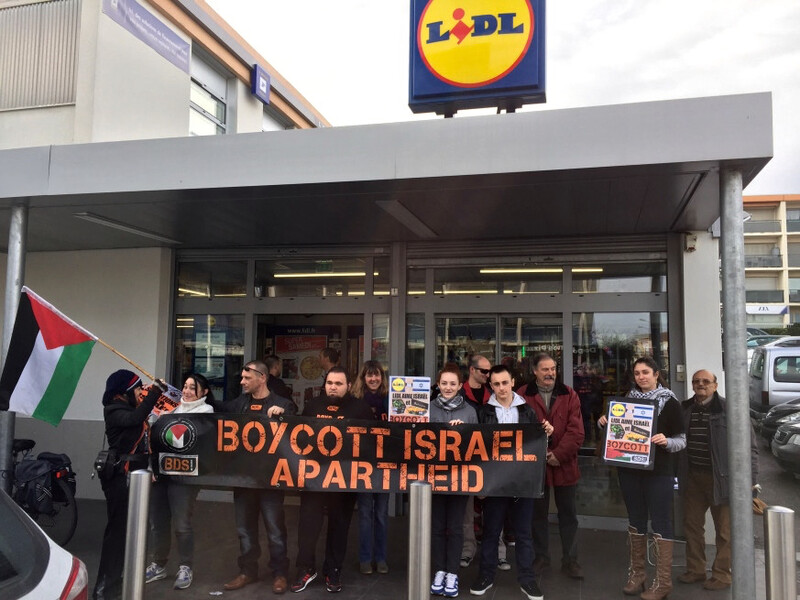
In a direct challenge to legal rulings, BDS activists staged a protest calling for the boycott of Israeli goods at a LIDL supermarket in the south of France on 23 January 2016. 

The BDS is a malign force, but also very inefficient. They can disrupt the selling of Israeli oranges in a Parisian supermarket, but it doesn’t work the same way with the complex Israel export of knowhow and high-tech products. Israel is economically strong and it is strengthening even more. In the last days, the Indian government has cleared a $2.5 billion deal purchasing from Israel for its army a medium-range surface-to-air missile defense system. The partners of the Leviathan gas reservoir, some 130 km west of Haifa, have announced that they will invest $3.75 billion. Crushing the BDS efforts, this is Israel’s biggest energy project and financial investment in all its history.

Tuesday, February 7, 2017

Saudi Arabia: The troubles of PetroRabigh

Saudi petrochemicals group PetroRabigh — a joint venture between state-owned Saudi Aramco and Japan’s Sumitomo Chemical — has further delayed the completion of its Rabigh 2 expansion project (near Jeddah), leading to a cost increase. The rest of the project, including the majority of electrical and non-electrical utilities, support services buildings, as well as the cumene and phenol units, will be completed in the second quarter of 2017, instead of second half of 2016 as previously announced. The main reason for the delays was the failure of the key contractors of the project to meet the planned implementation schedule. Feasibility study on the project was carried out in 2009, while construction work began three years later. Work on the ethane-fed cracker, a main component of the project, was completed in April. It raised the capacity of the cracker to 1.6mn t/yr of ethylene from 1.3mn t/yr. The cracker’s ethane processing capacity increased by 30mn ft³/d (30.9bn m³/yr) to 125mn ft³/d. The project also involves a new naphtha reformer and aromatics complex that will be able to process more than 2.7mn t/yr of naphtha and produce 1.3mn t/yr of paraxylene. It is designed to produce a broad range of petrochemical products, including ethylene propylene diene monomer rubber, thermoplastic olefins, methyl methacrylate and polymethyl methacrylate. Once the Rabigh 2 expansion project is completed, the entire complex will be capable of producing 5mn t/yr of petrochemical products and 15mn t/yr of refined petroleum products. Along with around 107,000 t/yr, of sulphur an increase from around 44,000 t/yr.
PetroRabigh's earnings have been hit hard by falling product prices, like many petrochemical firms in the kingdom, as they are closely tied to slumping oil prices.

Monday, November 14, 2016

Egypt in a dangerous crossroads

Egypt is undergoing a serious economic, social, political, military, and diplomatic crisis. Egypt has a larger population than Iran, but its economy is smaller, and it is a country with a not negligible geostrategic importance because of its location between Africa and Asia.

Currently Egypt is not able to feed properly its population, neither to provide it with enough employment. It is estimated that some 35 – 40% of Egypt's population is earning less than the equivalent of two dollars a day. Egypt has a population of over 90 million, and whilst the official figures for unemployment are of 27%, estimates put the number at a minimum of 40%. Recently the government devaluated the Egyptian pound by nearly half of its value. A veteran writer on Egyptian affairs has described last month the situation of the sugar deliverances as follows: “Sugar supplies have dwindled. Supermarkets and shops have run out, long queues are forming outside government cooperatives, and prices have doubled over the last few weeks. The state-owned Food Industries Holding Company has been reduced to rationing meagre sugar supplies to the food processing industry, especially soft drink makers, to keep factories running.” (cfr. http://www.thenational.ae/business/economy/patrick-werr-sugar-shortage-in-egypt-leaves-a-bitter-taste#full)  Tourism, another key factor in the Egyptian economy, is also under a severe crisis due that because of security concerns England canceled its flights to Sharm el-Sheikh and Russia canceled altogether its flights to Egypt.

Politically, Egypt’s power elite is divided between on one side President al-Sissi, backed by the Central Intelligence, and on the other the Armed Forces and the Military Intelligence. There seems to be no danger currently of another coup, because the fear of total political and economic collapse enhance the preference for a smooth leadership transition in the next few years. It is within this framework that we must see the call of some army officials to al-Sissi not to run for reelection in 2018.

The national security is challenged by the extremist armed actions in the Sinai Peninsula, in especial the Islamic State group. The army is having difficulty to cleanse the area due to its mountainous character and the presence of some highly trained terrorist insiders among Bedouin tribes who are difficult to track down.

If all this wasn’t enough, things got worse with the Cairo rejection of participating in the Saudi-led coalition battering the Shiite Houthis and their vote for a Russian resolution on Syria. As a result, last month Saudi Aramco decided to stop the transfer of discounted oil to Egypt.


In spite of everything, Egypt is still considered a leading power in the Arab world. The eyes are put now in the new incoming administration in Washington, to see if and how it will help Egypt, or if it will keep the retreatment path of the Obama policy. Trump will have to understand that the price of isolationism is the enhancement of the danger of pushing Egypt into Russian or Iranian arms.

Saturday, September 24, 2016

Egypt Imports of Liquefied Natural Gas

Egypt, the most populous Arab country, is seeking about 120 LNG (liquefied natural gas) cargoes for 2017, worth about $2.4 billion at current spot prices in Singapore. But this giant tender is done under the shadow of the discovery of a huge natural gas field in the Mediterranean would provide massive supply of feedstock to Egypt in the near future. The Zohr natural gas prospect discovered in 2015 could hold a potential 30 trillion cubic feet of natural gas; the field is located in the in Mediterranean Sea about 190km off the Egyptian coast and is the country’s energy sector's crown jewel. Egypt hopes to become the center of regional natural gas development. However, Egypt’s new gas discovery will not cover energy needs in the next four years, as the preparation of the new gas discovery’s full infrastructure may take five to six years.

Natural gas has become a vital resource for the Egyptian economy. Electricity consumption amounted to 62 per cent of the domestic production of gas, while the industrial sector consumption reached 23 per cent, homes and car fuel five per cents and oil derivatives 10 per cent. If in the year 2000 gas provided 35 percent of the total energy needs of the country, now it’s more than half. But the Zohr project is questioned by the price fundamentals of natural gas. LNG imports became attractive for nations such as Egypt after prices fell 61 percent over the past two years. This are enhanced mainly by two factors. Demand has been reduced by Japan, which had become one of the world’s largest LNG consumers after its Fukushima disaster, because it recently began restarting its nuclear reactors. There is an increased supply capacity coming online around the world that is likely to put further pressure on prices.


In any case, Egypt has chosen three firms to supply liquefied natural gas to its markets for the remainder of 2016: giant Glencore, an Anglo-Swiss commodities trading house, will supply cargo for October; Dutch Trafigura (the third-largest oil and metals trader in the world) will deliver a shipment for November; and U.K.-based B.B. Energy – a relatively new player in the LNG trade – will ship in December.

Monday, September 19, 2016

Yemen: the dangers of economic implosion

War, a high population growth rate, high unemployment, declining water resources, and severe food scarcity is leading Yemen to a bleak future for which is already the poorest country in the Middle East.

The country is infested by military activity that is harming its infrastructure and the access to all type of goods. For example, the Port of al-Hudaydah, which handles 60% of Yemen’s commercial traffic, was damaged in August 2015, its four cranes were destroyed and several warehouses were damaged, and it was operating at only half of its capacity.

The country has currently over 27 million inhabitants, 0.8 million are born each year, and the population is forecasted to reach about 33 million in 2025. Analysts have pointed out that at any given time almost 1 in 5 women is pregnant and nearly half of the population is under 15 years old.

Unemployment was of about 17-18% high.

Groundwater levels have been falling and Sanaa could be the first capital city in the world to run dry.

Scarce food resources caused a third of Yemenis facing chronic hunger even before the unrest. That number is growing quickly.


The not encouraging economic situation has to overcome war and the hindrance of tribalism. These seem to be the main impediments to the betterment of the Yemenite society, but they do not seem easy to toss away, at least in the near future.

Sunday, September 18, 2016

Morocco’s economy and OCP

Office Chérifien de Phosphates (OCP) — Morocco’s state owned phosphate producer and world’s leading exporter is a key factor in the Moroccan economy as it contributes more than 4 percent to the country’s GDP.

OCP is the second world’s largest producer of phosphate rock (the Chinese are the first) and ranks fifth among the main phosphoric acid makers, and had close to 8 million tonnes of granulation capacity in 2015.

Looking at the company’s activity, it is interesting to observe that on one hand since 2011 they have engaged into a massive multi-billion dollar expansion and modernization plan, but on the other OCP is currently receiving 40% less for its output than it did four years ago.


Between 2016 and 2020, OCP plans to commission four phosphate complexes, each with a one million tonnes granulation capacity, at its Jorf Phosphate Hub. In early 2016, OCP announced the project for a one million tonnes granulation facility in Phosboucraa, in the political disputed Western Sahara, for completion in 2020. A key element in OCP’s plans to expand its phosphate rock mining capacity from 30 million to 55 million mt/y has been the construction of the 187km long pipeline from Khourigba, inland, to the port and fertilizer production complex at Jorf Lasfar. Capable of handling 38 million mt/y of phosphate rock slurry, the pipeline has cut the company’s logistics costs by 90% while saving some 3 million m3 of water a year.

OCP accounts for some 28% of global phosphate exports in all forms, with mining capacities in excess of 32 million tonnes p.a. The company plans to expand its mining capacity over the next ten years, with the objective of reaching an effective capacity of 55 Mt in the longer term. Expansions are taken place in the main mining centers of Khouribga and Gantour. In the long term, the company will open new mines on the Meskala deposit (Essaouira Region), to feed downstream capacity projects at its Safi Phosphate Hub. A key feature of these projects is the expansion of floatation capacity, allowing OCP to further extract and process lower grades of phosphate ore. The bulk of the projected increase in production of phosphate concentrates would be earmarked for captive uses at OCP various Hubs. It has been reported that OCP plans to increase its phosphoric acid capacity from its current 4.7 millions of tonnes of P205 to 7.8 million in 2020.


Thursday, September 15, 2016