Sunday, August 13, 2017

The Libel of Colonialism

On September 16, 1947, three members of the Jewish Agency in Palestine, Aubrey (Abba) Eban, Jon Kimche, and David Horowitz, met in London with ‘Azzam Pasha, who was the first Secretary General of the Arab League (1945-1952).  That was prior to the partition of Palestine and the intention of the Zionist activists was to try to find an accommodation between Jews and Arabs on the issue of Palestine. On that occasion ‘Azzam Pasha said: “The Arab world is not in a compromising mood. (…) We shall try to defeat you. I’m not sure we’ll succeed, but we’ll try. We were able to drive out the Crusaders, but on the other hand we lost Spain and Persia. It may be that we shall lose Palestine. But it’s too late to talk of peaceful solutions.” It defined well the Arab position, but one that was not too easy to sell to the West. Better than accuse the Jews of being infidels, it was to brand them as colonialists. Different sectors of guilt-ridden Europe couldn’t find something better. They behaved horrible against the Jews in the Nazi era, but look, those Jews aren't saints either. True, the Europeans committed the sins of colonialism, but who didn’t, just look at the Jews in the Middle East.

Of course this accusation is rubbish. Zionism, contrary to the European colonial model, lack a mother country, a metropolis like the pillars of colonialism Britain, Portugal or France in its time, it has a clear national character of its own, and basically was not interested in the capitalist exploitation of the poorer peasants. Eastern European Jews didn’t come to the land of Israel, a poor corner, vastly underdeveloped and unoccupied of the Ottoman Empire, as agents of European powers like the Czarism, but precisely escaping from its humiliations and persecutions.

Still there are those who still insist that the Zionist themselves have described their own enterprise as one of colonization. Indeed that is true, but colonization is not always colonialism, as well as the colonialist enterprise has not always implied colonization. The Belgian in Congo, the British in Sudan or the French in Morocco, established colonial control in those countries without creating settlements of their European nationals. And there are cases like the Ukrainians in Canada or the Dutch in South Africa, were there was colonization but no support of a colonial government. In the case of Zionism there was colonization without colonialism. There was British colonialism, but Zionism had to confront it, and it displaced it with military means.


Iraqi Jews leaving Lod airport (Israel) on their way to ma'abara transit camp, 1951. European colonialism?


Finally, and in spite of all, there are still those who insist that the Zionist enterprise should be framed in the vast European expansion of the XIX and XX centuries, and therefore, even without metropolis or exploitation of cheap indigenous labor, they sustain the accusation of colonialism. This is very wrong. After the end of the Second World War, was the desire of the European Jews survivors of the displaced persons camps at Zeilsheim, St. Ottilien, Landsberg, Schauenstein, Feldafing, Dachau, Foehrnwald, and others, to immigrate to the land of Israel, a colonial aspiration? And it must be remembered that more than half of the immigrants to the newly founded state of Israel, were Jews who took refuge from Arab countries.


Zionism is not a colonial enterprise, but the national liberation movement of the Jews, through which they retake their destiny into their own hands and manage by themselves their future. In any case, Zionism is the astonishing story of a successful de-colonization revolutionary movement, which broke the chains of the Galut (the Jewish Diaspora), allowed the Jews to return to their roots and language, and brought them freedom.

Wednesday, June 14, 2017

Qatar strengths and weakness

Why Qatar matters so much? The answer is simple, because of their immense energy resources. They possess proven natural gas reserves of more than 25 trillion cubic meters - 13% of the world total and, among countries, third largest in the world - and proved oil reserves of more than 25 billion barrels, allowing production to continue at current levels for about 56 years. Their per capita GDP is one of the world highest amounting to about 130,000 US$. Qatar hosts the broadcaster Al Jazeera, which has a noted impact in the region. The tiny sheikhdom is an ally of the islamo-fascist regime of Iran, with which it exploits a vast gas field.

If they are so rich, should they be worried because of the recent steps of key Sunni Arab states against them? Yes. Some forty percent of the food supply used to arrive to Qatar from the Saudi border. In general, the country purchases abroad 90 percent of what their 2.7 million inhabitants eat. The curbing of Qatar Airlines will affect the country’s revenues.


The Qataris are a minority in their own country. Foreigners account for about 88 percent of the population, one of every four Qataris is of Indian origin. And the percentage of the foreigners among the workforce is even higher. The present political crisis could send the nearly 200 thousand Egyptian residents back home, which would affect certain sectors like the health service, were the Egyptians have an important role. We must not forget that Qatar has supported the Muslim Brotherhood, has mobilized its media outlets to attack the Egyptian regime and hosted a number of Muslim Brotherhood leaders who had fled Egypt.


Several days after Saudi Arabia, the United Arab Emirates, Egypt and Bahrain broke off relations with Qatar because of the emirate's financing of terrorist groups, such as Hamas, as well as its ties to Iran, they placed dozens of figures linked to Qatar on blacklists, including members of Qatar's royal family and one of the spiritual leaders of the Muslim Brotherhood.

What now? Will Qatar, the world’s biggest exporter of liquefied natural gas, resist the pressure or will Doha accept the Saudi terms? Will Iran and Turkey keep supporting the tiny Gulf sheikhdom and to what extent? When Trump enforced his alliance with Riyadh, was he aware of the giant American military airbase located southwest of Doha? What will happen with the Doha's hosting of the 2022 World Cup? We live in the Middle East, and in the Middle East the future is always a surprise.


Monday, May 29, 2017

Libya: Weakness and Crisis

Libya is one of the epicenters of the world crisis because of the massive influx to Europe of African migrants. Since 2015 385.000 of them have arrived from Libya to the Italian coasts and in four years, 12.064 have died in the sea. It is unknown the number dead in the desert.

Located between Egypt and Tunisia, Libya is weak and divided. There are two main reasons for this. Libya shares with a large part of the Arab world the lack of consolidation of a national state (as happens in Iraq, Syria, Lebanon, Yemen, etc.) and the main social fracture is composed by the tribal one. But there is also a peculiarity of the former regime of the Gaddafi dictatorship, who kept a security apparatus not especially strong and kept the military fragmented and not too much equipped because of fear of sedition.

Weak border controls have transformed the country into a primary departure area to migrate across the central Mediterranean to Europe in growing numbers. In addition, almost 350,000 people were displaced internally as mid-2016 by fighting between armed groups in eastern and western Libya and, to a lesser extent, by inter-tribal clashes in the country’s south. Coming from countries like Nigeria, Senegal or Gambia, they try to reach the coast but sometimes they are captured and sold averaging a cost of some 200 to 500 US dollars. They are used sometimes to achieve a rescue payment, sometimes exploited as forced labor or sexual abuse.

The strife-torn inner situation has handicapped the productive infrastructure including the oil terminals, in a country almost entirely dependent on oil and gas exports.


Bottom line, a bad situation, were apparently only an international strong help could deliver results, albeit we do not see this happening. A decisive European action could only be promoted not that much by the interest in the Libyan energy resources, but by the possibilities that the country’s domestic development could absorb the African migrants and stop their flow to Europe.

Thursday, March 9, 2017

Middle East and North Africa Natural Gas Production

Natural gas is a fossil fuel used as a source of energy for electricity generation, heating, cooking, fuel for vehicles, and as a chemical feedstock in the manufacture of plastics and other commercially important organic chemicals. Due to environmental reasons, natural gas is considered as the stepping stone between fossil fuels such as coal and oil, and renewable energy such as water, wind, and solar power. Natural gas reserves are estimated at 187 trillion cubic meters in 2015.

Natural Gas Production in Qatar

 
The Middle East holds 40% of worldwide proven natural gas reserves, followed by the CIS at 34%. OPEC countries control 47% of worldwide reserves and three countries (Russia, Iran and Qatar) account for 55% of global reserves.


Sunday, February 26, 2017

The Economic Boycott Against Israel

The strategy of the anti-Jewish boycott in modern times can be traced to the anti-Semitism of the Nazi Germany and in the Middle East to the postwar Arab anti-Zionist activity. In the same year that Hitler rose to power in Germany, the Arab Higher Committee (لجنة العربية العليا), headed by the future Nazi collaborationist Haj Amin al-Husseini, Mufti of Jerusalem, called for a boycott against the Jews in the British Mandate of Palestine. A couple of years before the 1948 establishment of the State of Israel, the Arab League organized an official boycott against the Jews of Palestine in December 1945.

Three Jewish businessmen are forced to march down a crowded Leipzig street while carrying signs reading: "Don't buy from Jews. Shop in German businesses!" Leipzig, Germany, 1935.
Three Jewish businessmen are forced to march down a crowded Leipzig street while carrying signs reading: "Don't buy from Jews. Shop in German businesses!" Leipzig, Germany, 1935. 
— US Holocaust Memorial Museum

In 1994, partially because of the Oslo accords, partially because the inefficiency of the Arab boycott, GCC states (Cooperation Council for the Arab States of the Gulf), officially ceased their participation in the boycott. They also states that the boycott hindered the regional economic development.

Since then the boycott was not much applied, but in the mid-2005 the Palestinians initiated a global movement pressuring for boycott, divestment and sanctions, in different fields like trade, academics, cultural activities, etc. The main aim of this movement is the destruction of the State of Israel as was admitted by one of its founders, Omar Barghouti, who said “ending the Israeli control of the territories is only the first stage in the way to implement the vision of dismantling Israel”. Barghouti was born in Qatar, grew up in Egypt and later moved to Israel as an adult. He opposes the two-state solution. He has been widely criticized for on one side lobbying for a global economic, cultural and academic boycott of Israel, and on the other, having studied in the Tel Aviv University.
In the end of the day, the BDS movement is basically an anti-Semitic force, and, in the same fashion that the Nazis attacked in the last century the Jewish main demographical centre, today they attack the current largest Jewish community of the world and the main resource of the Jewish people, the State of Israel.


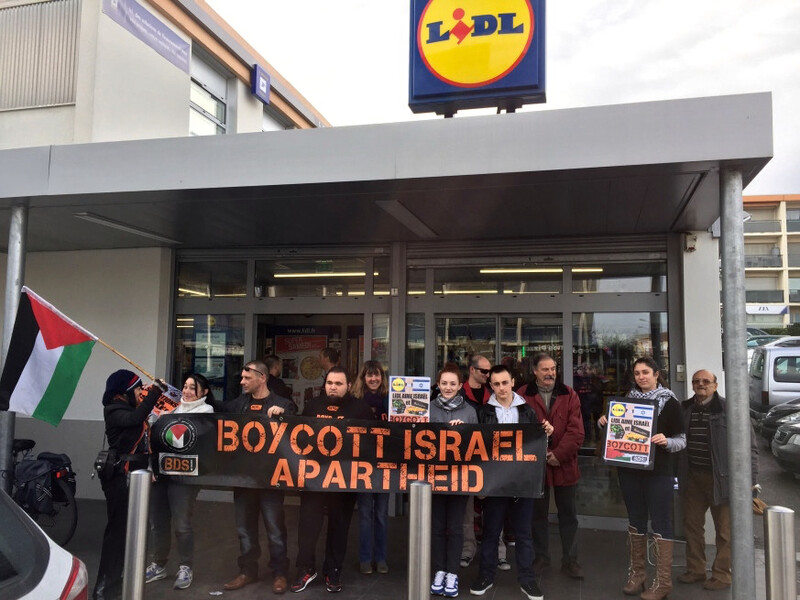
In a direct challenge to legal rulings, BDS activists staged a protest calling for the boycott of Israeli goods at a LIDL supermarket in the south of France on 23 January 2016. 

The BDS is a malign force, but also very inefficient. They can disrupt the selling of Israeli oranges in a Parisian supermarket, but it doesn’t work the same way with the complex Israel export of knowhow and high-tech products. Israel is economically strong and it is strengthening even more. In the last days, the Indian government has cleared a $2.5 billion deal purchasing from Israel for its army a medium-range surface-to-air missile defense system. The partners of the Leviathan gas reservoir, some 130 km west of Haifa, have announced that they will invest $3.75 billion. Crushing the BDS efforts, this is Israel’s biggest energy project and financial investment in all its history.

Tuesday, February 7, 2017

Saudi Arabia: The troubles of PetroRabigh

Saudi petrochemicals group PetroRabigh — a joint venture between state-owned Saudi Aramco and Japan’s Sumitomo Chemical — has further delayed the completion of its Rabigh 2 expansion project (near Jeddah), leading to a cost increase. The rest of the project, including the majority of electrical and non-electrical utilities, support services buildings, as well as the cumene and phenol units, will be completed in the second quarter of 2017, instead of second half of 2016 as previously announced. The main reason for the delays was the failure of the key contractors of the project to meet the planned implementation schedule. Feasibility study on the project was carried out in 2009, while construction work began three years later. Work on the ethane-fed cracker, a main component of the project, was completed in April. It raised the capacity of the cracker to 1.6mn t/yr of ethylene from 1.3mn t/yr. The cracker’s ethane processing capacity increased by 30mn ft³/d (30.9bn m³/yr) to 125mn ft³/d. The project also involves a new naphtha reformer and aromatics complex that will be able to process more than 2.7mn t/yr of naphtha and produce 1.3mn t/yr of paraxylene. It is designed to produce a broad range of petrochemical products, including ethylene propylene diene monomer rubber, thermoplastic olefins, methyl methacrylate and polymethyl methacrylate. Once the Rabigh 2 expansion project is completed, the entire complex will be capable of producing 5mn t/yr of petrochemical products and 15mn t/yr of refined petroleum products. Along with around 107,000 t/yr, of sulphur an increase from around 44,000 t/yr.
PetroRabigh's earnings have been hit hard by falling product prices, like many petrochemical firms in the kingdom, as they are closely tied to slumping oil prices.

Monday, November 14, 2016

Egypt in a dangerous crossroads

Egypt is undergoing a serious economic, social, political, military, and diplomatic crisis. Egypt has a larger population than Iran, but its economy is smaller, and it is a country with a not negligible geostrategic importance because of its location between Africa and Asia.

Currently Egypt is not able to feed properly its population, neither to provide it with enough employment. It is estimated that some 35 – 40% of Egypt's population is earning less than the equivalent of two dollars a day. Egypt has a population of over 90 million, and whilst the official figures for unemployment are of 27%, estimates put the number at a minimum of 40%. Recently the government devaluated the Egyptian pound by nearly half of its value. A veteran writer on Egyptian affairs has described last month the situation of the sugar deliverances as follows: “Sugar supplies have dwindled. Supermarkets and shops have run out, long queues are forming outside government cooperatives, and prices have doubled over the last few weeks. The state-owned Food Industries Holding Company has been reduced to rationing meagre sugar supplies to the food processing industry, especially soft drink makers, to keep factories running.” (cfr. http://www.thenational.ae/business/economy/patrick-werr-sugar-shortage-in-egypt-leaves-a-bitter-taste#full)  Tourism, another key factor in the Egyptian economy, is also under a severe crisis due that because of security concerns England canceled its flights to Sharm el-Sheikh and Russia canceled altogether its flights to Egypt.

Politically, Egypt’s power elite is divided between on one side President al-Sissi, backed by the Central Intelligence, and on the other the Armed Forces and the Military Intelligence. There seems to be no danger currently of another coup, because the fear of total political and economic collapse enhance the preference for a smooth leadership transition in the next few years. It is within this framework that we must see the call of some army officials to al-Sissi not to run for reelection in 2018.

The national security is challenged by the extremist armed actions in the Sinai Peninsula, in especial the Islamic State group. The army is having difficulty to cleanse the area due to its mountainous character and the presence of some highly trained terrorist insiders among Bedouin tribes who are difficult to track down.

If all this wasn’t enough, things got worse with the Cairo rejection of participating in the Saudi-led coalition battering the Shiite Houthis and their vote for a Russian resolution on Syria. As a result, last month Saudi Aramco decided to stop the transfer of discounted oil to Egypt.


In spite of everything, Egypt is still considered a leading power in the Arab world. The eyes are put now in the new incoming administration in Washington, to see if and how it will help Egypt, or if it will keep the retreatment path of the Obama policy. Trump will have to understand that the price of isolationism is the enhancement of the danger of pushing Egypt into Russian or Iranian arms.